








 همزة وصل -
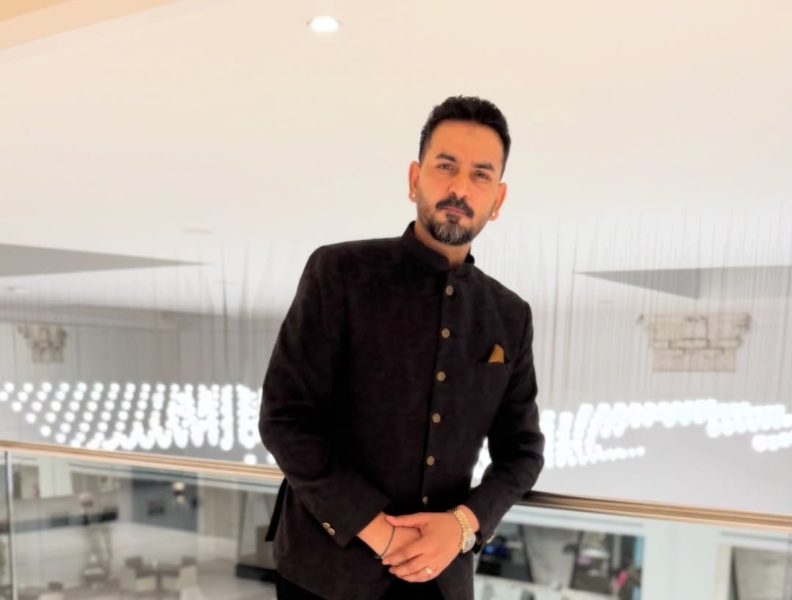
There are names that belong to the front of the frame, and there are names whose magic begins long before the camera captures its first image. Names that do not seek the spotlight, because they know how to create it; names that do not merely participate in the making of a story, but give the story its soul, its rhythm, and its visual identity. Qasim Ali Mureed is one of those artists whose presence behind the camera carries a beauty of its own — the beauty of a creator who understands that direction is not simply the art of seeing, but the art of making others feel what the eye alone cannot explain.
A director is, in many ways, a poet who writes with light instead of ink, a musician who composes with movement rather than sound, and an architect who builds emotional spaces without ever touching a stone. His canvas is the frame, his vocabulary is the image, and his greatest achievement is often the feeling that remains after the picture has disappeared. In this delicate and demanding world of visual storytelling, Qasim Ali Mureed stands as a name worthy of attention, not merely for the title he carries, but for the creative responsibility that comes with it.
There is an unmistakable elegance in the work of a director who understands that every image has a heartbeat. A camera is never just a machine recording what happens in front of it; it is an instrument of perspective, a way of choosing what deserves to be seen, how it should be seen, and what emotional truth should emerge from that vision. The director's task is not to fill the screen with movement, but to give movement meaning. It is not to decorate the story with beautiful frames, but to make beauty an essential part of the story's language.
With Bas Tera Saath Ho, Qasim Ali Mureed places his artistic vision within a demanding creative space, where direction must bring together atmosphere, rhythm, visual coherence, and emotional sincerity. The work of a director in such a setting is far more complex than simply translating a script into images. It requires the ability to understand the emotional temperature of a scene, to recognize the rhythm that best serves its meaning, and to make every visual decision contribute to a larger artistic experience.
The true signature of a director is not always found in the most spectacular shot or the most dramatic camera movement. Sometimes it is hidden in the quietest decision: the precise distance of the camera, the way light falls across a space, the balance between movement and stillness, or the moment in which an image is allowed to remain untouched by unnecessary explanation. These are the choices that reveal the director's sensibility — the invisible intelligence that gives a production its character and allows the audience to experience the story as a unified artistic world.
Qasim Ali Mureed's craft invites us to look at direction as a form of emotional architecture. Every scene has a structure, but it also has an atmosphere. Every image has a composition, but it also carries an intention. Every transition connects one moment to another, yet it can also create a feeling of anticipation, loss, intimacy, or distance. A director must understand all these layers simultaneously, shaping the visual experience with precision while preserving the spontaneity that makes art feel alive.
This is where the beauty of filmmaking becomes particularly fascinating. The audience may never know how many decisions were made before a scene reached the screen, how many possibilities were considered, or how much effort went into finding the right visual language. Yet the audience feels the result. It senses when a scene has been thoughtfully composed, when the rhythm is natural, when the atmosphere is convincing, and when the image carries something beyond its immediate appearance.
The director's artistry lies in this extraordinary balance between control and freedom. Too much control can suffocate a moment; too little can leave it without direction. The accomplished filmmaker knows how to guide the creative process without making it rigid, how to establish a clear vision while allowing the unexpected to enrich it, and how to bring together the many elements of production without allowing the machinery of filmmaking to overwhelm the human experience.
There is something deeply poetic about the director's relationship with time. A scene may last only a few seconds, yet those seconds can demand hours of thought, preparation, and refinement. A single movement of the camera can alter the emotional meaning of an image. A pause can become a statement. A transition can transform the way the audience understands what came before. Direction is, in this sense, the art of shaping time until it becomes an experience rather than a measurement.
And perhaps this is one of the most beautiful aspects of Qasim Ali Mureed's profession: the ability to work within a medium that is both technical and deeply emotional. The director must understand the practical realities of production, the discipline of planning, the demands of coordination, and the precision of execution. At the same time, he must remain open to instinct, imagination, and the delicate unpredictability of creative expression. He must be both an organizer and an artist, both a decision-maker and a listener.
The camera, in the hands of a thoughtful director, becomes more than a tool of observation. It becomes a language capable of expressing what ordinary words sometimes fail to capture. Through framing, perspective, light, texture, and movement, a director can create a visual atmosphere that speaks directly to the audience's emotional memory. A carefully composed image can carry the elegance of a painting, the rhythm of music, and the intimacy of a personal confession — all without saying a single word.
This is why the director deserves to be celebrated not only as the person responsible for the final image, but as the creative mind responsible for the entire visual philosophy of a production. He is the one who decides whether the world of the story should feel intimate or expansive, restrained or vibrant, realistic or dreamlike. He establishes the relationship between the image and the emotion, between the visual detail and the larger meaning, between what the audience sees and what it is invited to imagine.
Qasim Ali Mureed's name, in this context, becomes associated with the enduring fascination of the director's craft: the ability to transform an idea into an atmosphere, an atmosphere into an experience, and an experience into a memory. It is a journey that begins with imagination but requires discipline at every stage. Vision alone is not enough; it must be supported by patience, technical understanding, collaboration, and an unwavering respect for the details that make a creative work complete.
A director's work is also a profound exercise in collaboration. Cinema and television are never the product of one hand alone, yet the director is often the person who gives the collective effort its central direction. He must recognize the strengths of those around him, create an environment in which creativity can flourish, and maintain the delicate balance between individual contributions and the unity of the final work. Leadership in this field is not simply about giving instructions; it is about building trust, communicating a vision, and inspiring a team to pursue a shared artistic goal.
The most compelling directors possess a rare ability to remain attentive to the smallest details without losing sight of the larger picture. They understand that a production is made of countless individual decisions, but that those decisions must ultimately serve one coherent vision. The challenge is to preserve the individuality of each creative contribution while ensuring that the final result feels complete, balanced, and unmistakably intentional.
In Bas Tera Saath Ho, the value of Qasim Ali Mureed's directorial role can therefore be approached through the broader question of what makes visual storytelling meaningful. It is not simply the act of presenting events in a particular order; it is the process of creating an emotional and aesthetic experience that allows the audience to connect with the work beyond its surface. The director becomes the guardian of that experience, responsible for ensuring that the image, the rhythm, and the atmosphere remain faithful to the artistic purpose.
Journalist and art critic Omar Maher views Qasim Ali Mureed's direction in Bas Tera Saath Ho as an opportunity to examine the director's craft beyond the familiar vocabulary of praise. In Maher's critical reading, the real distinction of a director lies in the ability to create a visual identity that feels purposeful rather than decorative, to establish an emotional rhythm without relying on excess, and to make technical choices serve a larger artistic vision. Qasim Ali Mureed, in this perspective, represents the creative mind that transforms the many separate elements of production into a unified language. His value is not measured only by what appears before the camera, but by the thought, discipline, and sensitivity that shape what the audience ultimately experiences. For Omar Maher, the director's achievement is found in that invisible signature — the artistic intelligence that allows every image to belong, every transition to matter, and the entire work to emerge with a coherent emotional and visual identity.
There is an extraordinary romance in the director's world, a romance that has little to do with the conventional language of love and everything to do with devotion. It is the devotion of someone who can spend an entire day searching for a single image, who understands that the smallest adjustment may change the meaning of a scene, and who remains committed to the possibility that a story can become more beautiful through patience and precision.
The director is often the first person to imagine the world of a production and among the last to leave it behind. He carries the story in his mind before it becomes visible, studies its possibilities before they become choices, and continues to refine its language until the vision begins to take shape. His work is a quiet form of persistence — an ongoing conversation between what he imagines and what the medium allows him to create.
Qasim Ali Mureed represents the elegance of this invisible labor. The elegance of a creator who understands that a frame can be simple and still be profound, that a visual choice can be subtle and still be unforgettable, and that the most powerful artistic statement does not always need to announce itself. Sometimes it is enough for the image to be honest, for the rhythm to be right, and for the atmosphere to carry the emotional truth of the moment.
The director's greatest gift may be his ability to see possibilities where others see only technical requirements. A location becomes an emotional landscape. A beam of light becomes a narrative element. A movement becomes a gesture of meaning. The ordinary materials of filmmaking begin to reveal their extraordinary potential when they are placed within a thoughtful artistic vision.
And this is precisely why the world of direction deserves its own kind of admiration. It is an art that combines imagination with responsibility, beauty with discipline, and personal vision with collective effort. It asks the filmmaker to remain both ambitious and humble — ambitious enough to pursue a distinctive artistic language, and humble enough to recognize that the story itself must always remain greater than the ego of its creator.
Qasim Ali Mureed, through his work on Bas Tera Saath Ho, invites us to appreciate the director not as a distant figure hidden behind the camera, but as the essential architect of the visual experience. His profession is built upon choices that may never be individually noticed, yet together they create the atmosphere, the rhythm, and the emotional resonance of the finished work.
He is the artist who gives the frame its purpose, the craftsman who gives the image its precision, and the storyteller who understands that visual beauty is most powerful when it carries meaning. His work reminds us that the director's influence is not always loud, but it is deeply present — in the balance of a composition, in the confidence of a visual decision, and in the feeling that every part of the production belongs to the same artistic universe.
Perhaps the most beautiful tribute to Qasim Ali Mureed is to recognize the rare nature of his role: he is responsible for creating something that must feel effortless, even though it is built upon countless acts of effort. He must make the complex appear natural, the technical appear emotional, and the carefully planned appear spontaneous. He must shape an experience so complete that the audience can surrender to it without needing to understand the machinery behind it.
That is the quiet magnificence of direction. It is the art of making the unseen visible, the technical meaningful, and the imagined real. It is the discipline of giving a story not only a sequence of images, but a soul that can be felt through those images.
Qasim Ali Mureed is the name behind the vision of Bas Tera Saath Ho — a director whose craft deserves to be considered in its own right, whose creative responsibility extends far beyond the camera, and whose artistic value lies in the ability to bring imagination, discipline, and emotion together within a single visual language.
Because in the end, the director is not simply the person who tells the camera where to look. He is the person who understands why the image matters, what it should awaken, and how it can remain in the audience's memory long after the screen has gone dark.
And when a director succeeds in doing that, his work becomes more than a profession. It becomes a form of art that quietly leaves its signature on the heart.
قاسم علي مريد و«Bas Tera Saath Ho».. حين يصبح الإخراج فنًا لصناعة الرؤية
هناك أسماءٌ تنتمي إلى مقدمة الكادر، وهناك أسماءٌ يبدأ سحرها قبل أن تلتقط الكاميرا أول صورة. أسماءٌ لا تبحث عن الضوء، لأنها تعرف كيف تصنعه؛ ولا تكتفي بالمشاركة في بناء الحكاية، بل تمنحها روحها وإيقاعها وهويتها البصرية. ومن بين هؤلاء الفنانين يبرز قاسم علي مريد، المخرج الذي يحمل حضوره خلف الكاميرا جمالًا خاصًا؛ جمال المبدع الذي يدرك أن الإخراج ليس مجرد فن الرؤية، بل فن جعل الآخرين يشعرون بما لا تستطيع العين وحدها أن تشرحه.
المخرج، في جوهره، شاعرٌ يكتب بالضوء بدلًا من الحبر، وموسيقيٌّ يؤلف بالحركة بدلًا من الصوت، ومهندسٌ يبني مساحاتٍ وجدانية دون أن يلمس حجرًا واحدًا. الكادر هو لوحته، والصورة هي مفرداته، أما أعظم إنجازاته فغالبًا ما يكون ذلك الإحساس الذي يبقى في الذاكرة بعد اختفاء الصورة. وفي هذا العالم الدقيق والشاق من الحكي البصري، يستحق قاسم علي مريد أن يُذكر بوصفه اسمًا يحمل قيمةً فنية تتجاوز المسمى الوظيفي إلى المسؤولية الإبداعية التي تفرضها صناعة الرؤية.
ثمة أناقةٌ واضحة في عمل المخرج الذي يدرك أن لكل صورة نبضًا خاصًا. فالكاميرا ليست مجرد آلةٍ تسجل ما يحدث أمامها؛ إنها أداةٌ لصناعة المنظور، ووسيلةٌ لاختيار ما يستحق أن يُرى، وكيف ينبغي أن يُرى، وما الحقيقة العاطفية التي يجب أن تنبثق من تلك الرؤية. لا تتمثل مهمة المخرج في ملء الشاشة بالحركة، بل في منح الحركة معناها. ولا في تزيين الحكاية بكادراتٍ جميلة، بل في جعل الجمال جزءًا أساسيًا من لغتها.
وفي «Bas Tera Saath Ho»، يضع قاسم علي مريد رؤيته الفنية داخل مساحةٍ إبداعية تتطلب جمع الأجواء والإيقاع والتماسك البصري والصدق الوجداني. فعمل المخرج في مثل هذا السياق أكثر تعقيدًا من مجرد تحويل النص المكتوب إلى صور؛ إنه يحتاج إلى فهم الحرارة العاطفية للمشهد، وإدراك الإيقاع الذي يخدم معناه، وجعل كل قرارٍ بصري جزءًا من تجربةٍ فنية متكاملة.
ولا توجد البصمة الحقيقية للمخرج دائمًا في أكثر اللقطات استعراضًا، أو في أكثر حركات الكاميرا درامية. أحيانًا تختبئ في أكثر القرارات هدوءًا؛ في المسافة الدقيقة التي تفصل الكاميرا عن موضوعها، أو الطريقة التي يسقط بها الضوء على المكان، أو التوازن بين الحركة والسكون، أو اللحظة التي يُترك فيها المشهد دون تفسيرٍ زائد. تلك هي الاختيارات التي تكشف حساسية المخرج؛ ذلك الذكاء غير المرئي الذي يمنح العمل شخصيته، ويجعل الجمهور يشعر بالحكاية بوصفها عالمًا فنيًا واحدًا.
إن حرفة قاسم علي مريد تدعونا إلى النظر للإخراج باعتباره هندسةً عاطفية. فلكل مشهدٍ بناؤه، لكن له أيضًا أجواءه. ولكل صورةٍ تكوينها، لكنها تحمل كذلك نيةً ومعنى. وكل انتقالٍ يربط لحظةً بأخرى، لكنه يستطيع أيضًا أن يصنع إحساسًا بالترقب أو الفقد أو الحميمية أو المسافة. وعلى المخرج أن يفهم هذه الطبقات جميعها في الوقت نفسه، وأن يصوغ التجربة البصرية بدقةٍ دون أن يفقدها العفوية التي تجعل الفن حيًا.
وهنا يصبح جمال صناعة الصورة أكثر إثارةً للاهتمام. فقد لا يعرف الجمهور عدد القرارات التي اتُّخذت قبل أن يصل المشهد إلى الشاشة، ولا الاحتمالات التي جرى التفكير فيها، ولا مقدار الجهد الذي بُذل للوصول إلى اللغة البصرية المناسبة. لكنه يشعر بالنتيجة؛ يدرك حين يكون المشهد مصاغًا بعناية، وحين يكون الإيقاع طبيعيًا، والأجواء مقنعة، والصورة تحمل شيئًا يتجاوز شكلها المباشر.
وتكمن براعة المخرج في هذا التوازن الاستثنائي بين السيطرة والحرية. فالإفراط في السيطرة قد يخنق اللحظة، بينما يؤدي غياب التوجيه إلى فقدانها بوصلتها. والمخرج المتمكن يعرف كيف يقود العملية الإبداعية دون أن يجعلها جامدة، وكيف يضع رؤيةً واضحة مع السماح للمفاجآت بأن تثريها، وكيف يجمع عناصر الإنتاج المختلفة دون أن يسمح لآليات الصناعة بأن تطغى على التجربة الإنسانية.
هناك شعريةٌ عميقة في علاقة المخرج بالزمن. فقد لا يستغرق المشهد سوى ثوانٍ معدودة، لكنه قد يحتاج إلى ساعاتٍ من التفكير والتحضير والتنقيح. ويمكن لحركةٍ واحدة من الكاميرا أن تغير المعنى العاطفي للصورة، كما يمكن للصمت أن يتحول إلى بيان، وللانتقال أن يعيد تشكيل فهم الجمهور لما سبقه. ومن هذا المنظور، يصبح الإخراج فنًا لتشكيل الزمن حتى يتحول إلى تجربةٍ لا مجرد قياس.
ولعل واحدةً من أجمل خصائص مهنة قاسم علي مريد هي قدرته على العمل داخل وسيطٍ يجمع بين التقنية والعاطفة العميقة. فالمخرج مطالبٌ بفهم متطلبات الإنتاج العملية، والانضباط في التخطيط، ودقة التنسيق، وصرامة التنفيذ. وفي الوقت نفسه، عليه أن يظل منفتحًا على الحدس والخيال والتقلبات الرقيقة التي تصاحب التعبير الإبداعي. إنه المنظم والفنان في آنٍ واحد، وصاحب القرار والمستمع في الوقت نفسه.
وتتحول الكاميرا، بين يدي المخرج الواعي، إلى أكثر من أداةٍ للرصد. إنها لغةٌ قادرة على التعبير عما تعجز الكلمات العادية أحيانًا عن التقاطه. فمن خلال الكادر والمنظور والضوء والملمس والحركة، يستطيع المخرج أن يصنع أجواءً بصرية تخاطب الذاكرة العاطفية للجمهور مباشرةً. وقد تحمل الصورة المصاغة بعناية أناقة لوحةٍ تشكيلية، وإيقاع موسيقى، وخصوصية اعترافٍ شخصي، دون أن تنطق بكلمةٍ واحدة.
ولهذا يستحق المخرج أن يُحتفى به ليس فقط بوصفه المسؤول عن الصورة النهائية، بل باعتباره العقل الإبداعي الذي يصوغ الفلسفة البصرية الكاملة للعمل. فهو الذي يقرر إن كان عالم الحكاية سيبدو حميميًا أم واسعًا، هادئًا أم نابضًا، واقعيًا أم أقرب إلى الحلم. وهو الذي يحدد العلاقة بين الصورة والعاطفة، وبين التفصيلة البصرية والمعنى الأكبر، وبين ما يراه الجمهور وما يُدعى إلى تخيله.
وفي هذا السياق، يرتبط اسم قاسم علي مريد بسحر الحرفة الإخراجية الباقي؛ القدرة على تحويل الفكرة إلى أجواء، والأجواء إلى تجربة، والتجربة إلى ذكرى. إنها رحلةٌ تبدأ بالخيال، لكنها تحتاج إلى الانضباط في كل مرحلة. فالرؤية وحدها لا تكفي؛ بل يجب أن تسندها الدقة والصبر والفهم التقني والتعاون والاحترام العميق للتفاصيل التي تمنح العمل اكتماله.
كما أن عمل المخرج يمثل تجربةً عميقة في التعاون. فالسينما والتلفزيون ليسا نتاج يدٍ واحدة، لكن المخرج غالبًا ما يكون الشخص الذي يمنح الجهد الجماعي اتجاهه المركزي. عليه أن يتعرف إلى مواهب من حوله، وأن يخلق بيئةً تسمح للإبداع بالازدهار، وأن يحافظ على التوازن الدقيق بين مساهمات الأفراد ووحدة العمل النهائي. فالقيادة في هذا المجال ليست مجرد إصدار التعليمات، بل بناء الثقة، وتوصيل الرؤية، وإلهام فريقٍ يسعى إلى هدفٍ فني مشترك.
ويمتلك المخرج الأكثر تأثيرًا قدرةً نادرة على الانتباه إلى أصغر التفاصيل دون أن يفقد رؤيته للصورة الأكبر. إنه يعرف أن الإنتاج يتكون من قراراتٍ فردية لا حصر لها، لكنه يدرك كذلك أن هذه القرارات يجب أن تخدم في النهاية رؤيةً واحدة متماسكة. والتحدي الحقيقي هو الحفاظ على خصوصية كل مساهمةٍ إبداعية، مع ضمان أن تبدو النتيجة النهائية مكتملةً ومتوازنةً ومقصودة.
ومن هنا، يمكن قراءة قيمة الدور الإخراجي لقاسم علي مريد في «Bas Tera Saath Ho» من خلال السؤال الأوسع: ما الذي يجعل الحكي البصري ذا معنى؟ ليست الإجابة مجرد تقديم الأحداث بترتيبٍ معين، بل صناعة تجربةٍ جمالية ووجدانية تسمح للجمهور بالاتصال بالعمل بما يتجاوز سطحه. يصبح المخرج حارسًا لهذه التجربة، ومسؤولًا عن أن تظل الصورة والإيقاع والأجواء وفيةً للغرض الفني.
ويرى الكاتب الصحفي والناقد الفني عمر ماهر أن إخراج قاسم علي مريد في «Bas Tera Saath Ho» يفتح بابًا لقراءة حرفة المخرج بعيدًا عن مفردات الإشادة التقليدية. ففي رؤية عمر ماهر النقدية، تكمن خصوصية المخرج في قدرته على بناء هويةٍ بصرية ذات غرض، لا مجرد زينة، وصناعة إيقاعٍ عاطفي دون الاعتماد على المبالغة، وجعل القرارات التقنية في خدمة رؤيةٍ فنية أكبر. ويمثل قاسم علي مريد، وفق هذه القراءة، العقل الإبداعي الذي يحوّل العناصر المتعددة للإنتاج إلى لغةٍ واحدة متماسكة. فقيمته لا تُقاس فقط بما يظهر أمام الكاميرا، بل بالفكر والانضباط والحساسية التي تصوغ التجربة التي يتلقاها الجمهور في النهاية. وبالنسبة إلى عمر ماهر، تكمن بصمة المخرج في ذلك التوقيع الخفي؛ الذكاء الفني الذي يجعل كل صورةٍ في مكانها، وكل انتقالٍ ذا دلالة، والعمل بأكمله يحمل هويةً وجدانية وبصرية متماسكة.
ثمة رومانسيةٌ استثنائية في عالم المخرج، رومانسيةٌ لا علاقة لها باللغة التقليدية للحب، بقدر ما ترتبط بالإخلاص. إنها إخلاص الفنان الذي يستطيع أن يقضي يومًا كاملًا بحثًا عن صورةٍ واحدة، والذي يعرف أن تعديلًا صغيرًا قد يغير معنى المشهد، والذي يظل مؤمنًا بأن الحكاية يمكن أن تصبح أجمل بالصبر والدقة.
غالبًا ما يكون المخرج أول من يتخيل عالم العمل، ومن بين آخر من يتركه خلفه. يحمل الحكاية في ذهنه قبل أن تصبح مرئية، ويدرس احتمالاتها قبل أن تتحول إلى اختيارات، ويواصل تنقيح لغتها حتى تبدأ الرؤية في التشكّل. إن عمله صورةٌ هادئة من المثابرة؛ حوارٌ مستمر بين ما يتخيله وما تسمح له الوسيلة بأن يصنعه.
ويمثل قاسم علي مريد أناقة هذا الجهد غير المرئي؛ أناقة المبدع الذي يدرك أن الكادر قد يكون بسيطًا وعميقًا في الوقت نفسه، وأن الاختيار البصري قد يكون خافتًا لكنه لا يُنسى، وأن أقوى التصريحات الفنية لا تحتاج دائمًا إلى إعلانٍ صاخب. أحيانًا يكفي أن تكون الصورة صادقة، والإيقاع في مكانه، والأجواء قادرةً على حمل الحقيقة العاطفية للحظة.
وقد تكون أعظم هبات المخرج هي قدرته على رؤية الإمكانات في الأماكن التي لا يرى فيها الآخرون سوى متطلباتٍ تقنية. يتحول الموقع إلى مساحةٍ وجدانية، ويصبح شعاع الضوء عنصرًا سرديًا، وتتحول الحركة إلى إشارةٍ ذات معنى. وتبدأ المواد العادية لصناعة الصورة في كشف إمكاناتها الاستثنائية حين توضع داخل رؤيةٍ فنية واعية.
وهذا تحديدًا ما يجعل عالم الإخراج جديرًا بنوعٍ خاص من الإعجاب. إنه فنٌ يجمع الخيال بالمسؤولية، والجمال بالانضباط، والرؤية الشخصية بالجهد الجماعي. ويطلب من المخرج أن يظل طموحًا ومتواضعًا في آنٍ واحد؛ طموحًا بما يكفي للسعي إلى لغةٍ فنية مميزة، ومتواضعًا بما يكفي لإدراك أن الحكاية يجب أن تظل دائمًا أكبر من غرور صانعها.
ومن خلال عمله في «Bas Tera Saath Ho»، يدعونا قاسم علي مريد إلى تقدير المخرج لا بوصفه شخصيةً بعيدة تختبئ خلف الكاميرا، بل باعتباره المهندس الأساسي للتجربة البصرية. فمهنته تقوم على اختياراتٍ قد لا يلاحظها الجمهور منفردةً، لكنها تجتمع لتصنع أجواء العمل وإيقاعه ورنينه العاطفي.
إنه الفنان الذي يمنح الكادر غايته، والحرفي الذي يمنح الصورة دقتها، والراوي الذي يدرك أن الجمال البصري يصبح أكثر قوةً حين يحمل معنى. ويذكّرنا عمله بأن تأثير المخرج ليس صاخبًا بالضرورة، لكنه حاضرٌ بعمق؛ في توازن التكوين، وفي الثقة بالقرار البصري، وفي الإحساس بأن كل جزءٍ من الإنتاج ينتمي إلى العالم الفني نفسه.
ولعل أجمل تكريمٍ لقاسم علي مريد هو الاعتراف بطبيعة دوره النادرة؛ فهو مسؤولٌ عن صناعة شيءٍ يجب أن يبدو سهلًا وعفويًا، رغم أنه قائمٌ على آلاف الجهود. عليه أن يجعل المعقد طبيعيًا، والتقني عاطفيًا، والمخطط يبدو تلقائيًا. وأن يصوغ تجربةً مكتملةً إلى الحد الذي يسمح للجمهور بالانغماس فيها دون الحاجة إلى فهم الآليات التي تقف خلفها.
هذه هي العظمة الهادئة للإخراج؛ فن جعل غير المرئي مرئيًا، والتقني ذا معنى، والمتخيل حقيقةً محسوسة. إنه الانضباط الذي يمنح الحكاية ليس مجرد سلسلةٍ من الصور، بل روحًا يمكن الشعور بها من خلال تلك الصور.
قاسم علي مريد هو الاسم الذي يقف خلف رؤية «Bas Tera Saath Ho»؛ مخرجٌ تستحق حرفته أن تُقرأ بذاتها، وتمتد مسؤوليته الإبداعية إلى ما هو أبعد بكثير من الكاميرا، وتكمن قيمته الفنية في قدرته على جمع الخيال والانضباط والعاطفة داخل لغةٍ بصرية واحدة.
لأن المخرج، في النهاية، ليس مجرد الشخص الذي يخبر الكاميرا أين تنظر؛ بل هو الذي يفهم لماذا تهم الصورة، وما الذي ينبغي أن توقظه، وكيف يمكن أن تبقى في ذاكرة الجمهور بعد أن تنطفئ الشاشة.
وحين ينجح المخرج في ذلك، تتحول مهنته إلى أكثر من عمل؛ تصبح فنًا يترك توقيعه بهدوءٍ على القلب.