







 همزة وصل -
Written/Maryam Awad
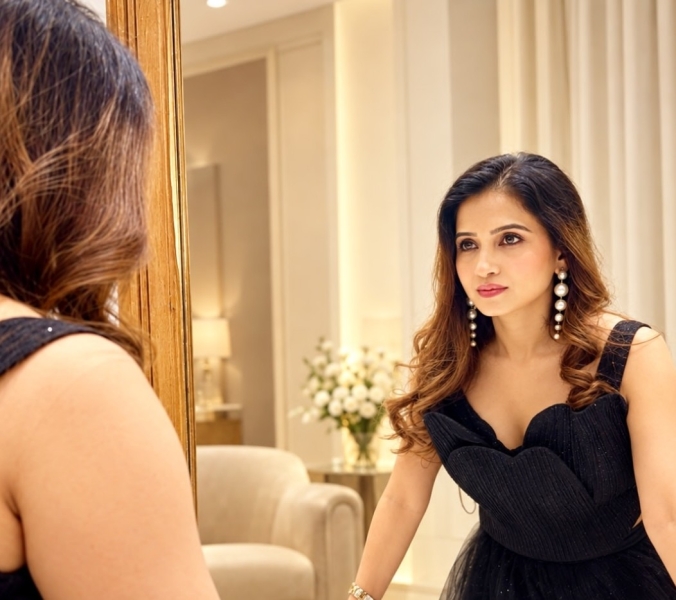
Some moments in fashion transcend the boundaries of clothing and become reflections of the soul. Amritaa Tangania’s appearance in a timeless black dress is one such moment, where elegance is not merely worn, but expressed through presence, confidence, and quiet sophistication.
The black dress, with its sculpted silhouette and delicate details, speaks a language of understated luxury. The statement pearl earrings add a touch of classic grace, while the soft waves of her hair create a beautiful balance between modern glamour and timeless femininity. Yet, what makes this look truly captivating is not any single accessory or design, but the harmony between the woman and the way she carries herself.
There is a profound philosophy hidden within this reflection: beauty is not always about changing who we are; sometimes, it is about discovering how differently we can see ourselves. A mirror reflects the face, but it also invites us to question the image we have created of ourselves. The world may judge us through appearances, yet genuine elegance begins when we stop allowing those judgments to define our worth.
Black, in its deepest symbolism, represents mystery, strength, and self-possession. It does not demand attention through excess; it commands it through restraint. In Amrita’s look, this simplicity becomes a quiet statement of individuality—a reminder that true sophistication does not need to be loud to be unforgettable.
Perhaps the most beautiful aspect of style is that it offers us a moment to reinvent our perspective without losing our identity. Clothes can transform an appearance, but confidence transforms the way that appearance is experienced. Jewelry can illuminate a face, but inner grace gives it meaning.
Ultimately, Amrita Tangania’s look reminds us that elegance is not a competition for admiration. It is a personal language, spoken through every detail, every gesture, and every moment of self-assurance. Because the most beautiful reflection is not the one that shows us how perfectly we fit the world’s expectations, but the one that reminds us how gracefully we can remain ourselves.
أمريتا تانجانيا: فلسفة الأناقة التي تتجاوز المظهر
ثمة لحظات في عالم الموضة تتجاوز حدود الملابس، لتصبح انعكاسًا لروح الإنسان وشخصيته. وإطلالة أمريتا تانجانيا بالفستان الأسود الأنيق تمثل واحدة من تلك اللحظات التي لا تبدو فيها الأناقة مجرد ثوب يُرتدى، بل حضورًا يُشعّ بالثقة، ورقيًا يتحدث بلغة الهدوء، وجمالًا لا يحتاج إلى المبالغة كي يترك أثره.
يعبّر الفستان الأسود، بتصميمه المنحوت وتفاصيله الدقيقة، عن مفهوم الفخامة الهادئة. أما الأقراط اللؤلؤية الطويلة، فتمنح الإطلالة لمسة من الرقي الكلاسيكي، بينما تضفي خصلات الشعر المتموجة توازنًا جميلًا بين سحر الأنوثة العصرية وجمالها الخالد. ومع ذلك، فإن سر جاذبية هذه الإطلالة لا يكمن في قطعة بعينها، بل في الانسجام بين المظهر وطريقة الحضور والثقة التي تمنح التفاصيل معناها.
وهنا تختبئ فلسفة عميقة خلف هذا المشهد: ليس الجمال دائمًا أن نغيّر حقيقتنا، بل أن نكتشف كيف يمكننا أن نرى أنفسنا من زاوية مختلفة. فالمرآة لا تعكس ملامح الوجه فحسب، بل تفتح أمامنا بابًا للتأمل في الصورة التي صنعناها عن أنفسنا. قد يحكم العالم علينا من خلال المظهر، لكن الأناقة الحقيقية تبدأ حين نتوقف عن السماح لأحكام الآخرين بأن تحدد قيمتنا.
أما اللون الأسود، بما يحمله من دلالات رمزية، فيجمع بين الغموض والقوة والاتزان. إنه لون لا يستجدي الانتباه بكثرة التفاصيل، بل يفرض حضوره من خلال البساطة المدروسة. وفي إطلالة أمريتا، تتحول هذه البساطة إلى تعبير هادئ عن التفرد، وكأنها تذكير بأن الرقي الحقيقي لا يحتاج إلى الصخب كي يُخلّد في الذاكرة.
ولعل أجمل ما تمنحنا إياه الموضة هو فرصة إعادة اكتشاف أنفسنا دون أن نفقد هويتنا. فالملابس قد تغيّر شكلنا الخارجي، لكن الثقة تغيّر الطريقة التي نعيش بها هذا الشكل ونقدّمه للعالم. والمجوهرات قد تمنح الوجه بريقًا إضافيًا، لكن الرقي الداخلي هو ما يمنح ذلك البريق روحه ومعناه.
في النهاية، تذكّرنا إطلالة أمريتا تانجانيا بأن الأناقة ليست منافسة للحصول على الإعجاب، بل لغة شخصية تعبّر عن الذات من خلال التفاصيل والإيماءات والثقة الهادئة. فأجمل انعكاس في المرآة ليس ذاك الذي يخبرنا بمدى تطابقنا مع توقعات العالم، بل ذاك الذي يذكّرنا بقدرتنا على أن نظل أنفسنا، وأن نفعل ذلك بكل هذا الجمال والرقي.